


































































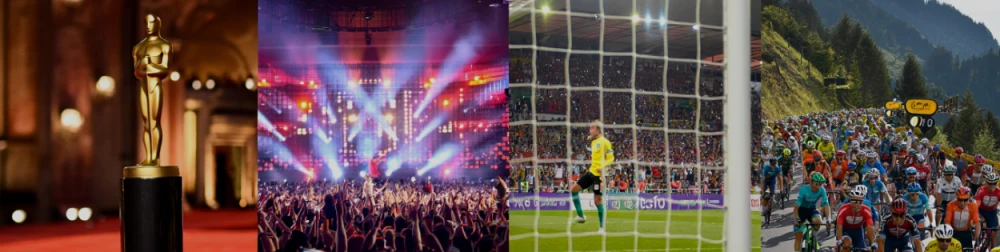
Six Months of Global Spectacle: The Unmissable Events Shaping 2026’s Biggest Betting Markets

Some numbers are just too big to ignore. In 2026, the global sports betting markets will handle $124.88 billion in wagers, up from $112.26 billion last year. This is according to Precedence Research. Europe alone will account for 44% of this volume. But here’s what should make every bettor pause. In the next six months, four singular events will concentrate more betting liquidity than most entire years combined.
This is not your typical year. From March through July, we are entering a compressed window where culture, sport, and circumstance collide to create what professional bettors call “peak variance.” Simply put, these are moments where markets are most vulnerable to narrative shifts, logistical chaos, and the simple unpredictability of human performance under pressure.
For the betting industry, these months represent a period where casual viewers can turn into engaged participants. On the other hand, bettors will be put to the test. Can you read the signals faster than the market? Or will you be caught holding tickets on the favorite when the underdog steals the spotlight?
Top casinos for betting on these special events
| Casino | Welcome Bonus |
|---|---|
| Talismania | 100% up to €200 |
| Wyns | 100% up to €100 |
| Epicbet | 300% up to €100 |
The Oscars 2026: The Heavy Favorite vs. The Sentimental Choice
For many people, the Oscars is a mere trophy presentation ceremony. But this is no longer the case, at least for the past few years, as bettors now see it as an opportunity. In fact, the awards-season betting is one of the most structured non-sport markets in the world.
After nominations are public, odds tend to shorten dramatically on consensus contenders, and March 15, 2026, presents a fascinating case study. Here’s how:
And the best picture goes to?
Paul Thomas Anderson’s One Battle After Another currently dominates the betting markets as the clear favorite in recent Academy Awards history. According to Kalshi prediction markets, the film boasts a 78% probability (roughly -350 odds) to win the category. The film is an adaptation of Thomas Pynchon’s novel Vineland, and it enters the final stages with overwhelming momentum.
But the betting story isn’t just about the clear favorite. It’s also about the challenger that captured the cultural conversation. That is Ryan Coogler’s Sinners. Despite receiving a record-breaking 16 nominations, the film finds itself as a significant underdog with only 14% probability (+600 odds). But we all know the story of the underdog, right? Perhaps a potential upset loading? Of course, it’s such disparity between nomination count and win probability that speaks to how efficiently the Oscars markets have begun pricing industry consensus.
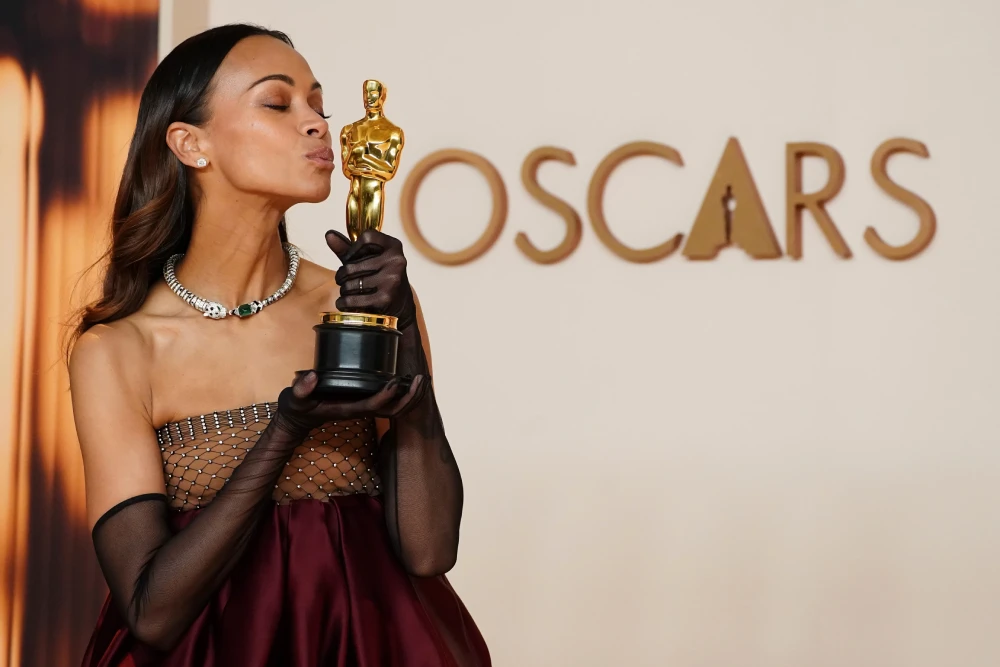
Acting categories
It’s also chalk-heavy in the acting category. Starting with Best Actor, Timothée Chalamet is a clear favorite boasting 73% (-500) probability for his role in Marty Supreme. However, he’s up against veteran Leonardo DiCaprio (One Battle After Another), lurking at +600. Historically, the Academy loves a veteran narrative, and many bettors are taking the value on DiCaprio, hoping for a late-season surge.
Onto the best Actress, and Jessie Buckley leads the race courtesy of her performance in Hamnet. With odds at -1800, the market implies a strong 93.5% probability of her winning.
The unpredictability factor is still king. In fact, the Academy’s voting body has shown a growing appetite for international films and unconventional narratives in recent years. As such, this makes outright certainty dangerous, especially when odds appear lopsided.
Eurovision Song Contest: Momentum Markets and Late-Week Chaos
The Oscars is all about prestige, but the Eurovision Song Contest (ESC) is more of controlled chaos. This year, the contest heads to the Wiener Stadthalle in Vienna between May 12 and 16, 2026, after Austria’s victory in 2025. What makes the ESC exciting is that this market behaves more like a live trading floor. It’s reactive, emotional, and heavily influenced by rehearsal week momentum.
Current market leaders
Bookmakers put Finland as a clear favorite with odds surging to 4/1 (20% implied probability). This shows clear confidence in the musical quality and strategic positioning of the Nordic country. In fact, this entry has captured the imagination of bookmakers who see a package with broad jury appeal and televote potential, a combination that historically translates to victory.
However, history tells us that the Eurovision markets are never static. The current landscape reveals fascinating tensions with Greece sitting at 5/1. Denmark recently sprang to 7/1 (12.5%) after unveiling a competitive national lineup. Sweden closes the list with 8/1 (11.1%).
Israel’s political tensions and the UK’s position
The most significant movement has been Israel’s drop from market leader to 8/1 joint favorite amid political controversy. As a result, five countries withdrew as soon as Israel confirmed participation. This means the voting mechanics will change in ways market models struggle to model.
On the other hand, the United Kingdom, represented by electronic artist Look Mum No Computer, finds itself at 25/1 (3.8%). With such diminished odds, it’s clear bookmakers don’t rank the UK’s recent competitive record high enough to disrupt its innovative selection.

The rehearsal risk and information timeline
The favorite price tag placed on Finland could easily suffer due to “rehearsal correction” that has jinxed many pre-contest favorites in the past. Should the vocal performances or staging fail to live up to expectations during technical rehearsals in Vienna, it’s possible to experience what happened in 2025 when Sweden (heavy favorites then) saw their fortunes dwindle massively.
However, what makes Eurovision 2026 particularly intriguing for bettors is the timing of the information reveal. Unlike the Oscars, here precursor awards provide months of signals, Eurovision’s crucial data points (rehearsal footage, staging reveals, and semi-final results emerge in the final two weeks before the Grand Final on May 16.
This translates into a compressed window of volatility where sharp bettors can exploit market inefficiencies before the public money floods in.
FIFA World Cup 2026: Anticipation Meets Uncertainty
The 2026 FIFA World Cup is, quite literally, the biggest betting event in human history. In fact, this year’s edition is projected to exceed $35 billion in global betting handle—more than double the $1.8 billion Americans wagered on the 2022 tournament in Qatar.
However, there will be one major change in this year’s spectacle. For the first time, the month-long tournament will feature 48 teams, expanding from the traditional 32. This structural change fundamentally alters the entire betting landscape, and this is how:
- More group-stage matches
- More qualification permutations
- Increased probability of underdogs reaching the knockout rounds
- Greater variance in early-stage outcomes
- Expanded markets (group winner, stage-of-elimination, path-to-final props)
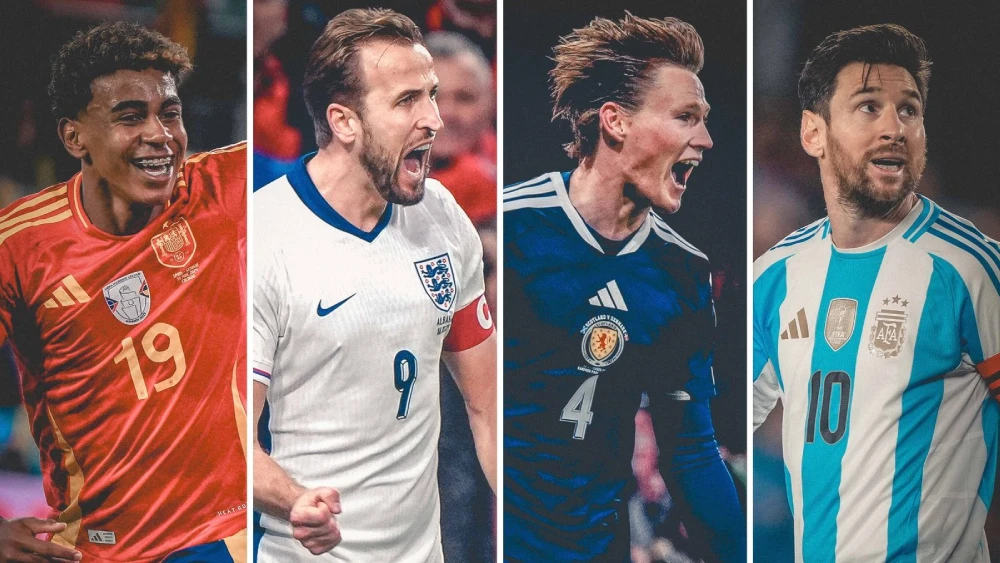
Current outright markets show Spain and England as co-favorites at +450 (4.5/1), with France and Brazil at +750 and +850 respectively. Argentina, the defending champions, sit at +900, while Portugal and Germany round out the realistic contenders at +1100 and +1200. From the odds, it’s clear many punters see this tournament as wide open, with no single team dominating the betting as France did entering the 2018 tournament or Brazil did during the magical 2002 showdown.
The Tour de France 2026
While the 113th Tour de France officially kicks off July 4, 2026, just after the six-month window, the betting markets for cycling’s greatest race will be active throughout the first half of the year. This makes it a crucial component of the 2026 betting landscape. Therefore, this year’s edition promises to be particularly significant as it represents the first time the race starts in Barcelona. The Grand Départ features a 3.7km team time trial that will immediately test the tactical sophistication of the peloton.
Pogačar dominates the markets
This market offers perhaps the most lopsided pricing of any major sporting event this year. Tadej Pogačar, the 27-year-old Slovenian phenomenon, enters as a prohibitive favorite with odds sitting at 1.34(-290). That means bettors must risk $290 to win $100. This price reflects Pogačar’s utter dominance of the 2025 edition, where he won by over four minutes and claimed four individual stages.
Two-time champion Jonas Vingegaard from Denmark is Pogačar’s main challenger and his odds sit at 3.60 (+260). German Florian Lipowitz, who finished third in 2025, trades at 8.75 (+775). The pricing suggests bookmakers see this as a two-horse race with Tadej Pogačar holding a decisive advantage, a narrative that has remained consistent since his 2024 Giro d’Italia-Tour de France double.
The route and tactical variables
Unique challenges await participants in this year’s route and that means more betting angles beyond the outright winner. At 3,333km with 54,450 meters of climbing, this is one of the most demanding editions in recent history. The race also features eight mountain stages which include three summit finishes above 2,000 meters, and two individual time trials totaling 58km.
One of the factors we believe will be decisive include the high-altitude finishes in the Alps and Pyrenees. Stage 15 finishes at Peyragudes (1,600m), Stage 17 at Val Thorens (2,365m), while stage 19 terminates at Isola 2000 (2,022m). These high elevations favor climbers with proven high-altitude performance. As a result, it creates value opportunities in stage betting markets, especially for specialists who may not necessarily challenge for the overall title but can deliver on specific days.
Team time trial factor
An immediate tactical dimension characterizes the Barcelona team time trial opening stage. Unlike traditional Tour starts where the yellow jersey changes hands frequently in the first week, this edition could see a team establish early control.
UAE Team Emirates (Pogačar) and Visma-Lease a Bike (Vingegaard) will battle for every second from day one, potentially creating significant time gaps that shape the entire race narrative.
The long-term betting engagement
What makes the Tour de France unique in the betting calendar is its three-week format, which allows for sustained engagement. While the race itself starts in July, the markets will be active throughout June as form becomes clearer through the Critérium du Dauphiné and Tour de Suisse. Bettors have a chance to build positions early, hedge as the race develops, and exploit daily market inefficiencies across 21 stages
The stage betting markets offer particular value. While Pogačar is Unbackable for the overall at 1.34, daily stage winners present opportunities for contrarian plays.
Tradition and trends in the Grand National 2026
The cultural spectacles will for sure dominate the headlines, but will represent the purest form of betting tradition is the Grand National at Aintree in April 2026. For starters, the world’s most famous steeplechase consistently generates over £250 million in bets from millions of customers, creating a liquidity pool that dwarfs most events.
Democratic chaos is what fuels the betting stage in this competition. Only three of the last ten winners have started as favorites, with the average winning price sitting at about 20/1. However, recent trends suggest looking for horses carrying 11-00 or less, aged 8 or 9, with at least three seasonal runs and form at 3 miles or longer.
Market formation timeline and the favorite’s record
For 2026, the market will form in the weeks leading up to the April race. The weights were already announced in February and the final field confirmed in early April. While the trends are clear, the Grand National’s 30-fence, 4-mile-2.5-furlong challenge remains the ultimate test of stamina and luck. This volatile combination is what keeps bookmakers and punters returning annually
Tennis, NBA, and beyond provide additional options
The first half of 2026 offers continuity for traditional sports bettors with several other options on the cards. June will host the NBA finals from a season that has seen the Oklahoma City Thunders attempt to defend their 2025 title.
Just before the NBA finals is the French Open in late May when the Tennis’s clay court season culminates. This will be the curtain raiser for July’s Wimbledon.
May will also see the final of the Champions League play out in Budapest to determine Europe’s football club champion. However, bettors don’t have to wait until then, with knockout stages providing plenty of options to bet on.
The countdown continues
As we step into March, the countdown continues and the Oscars will set the tone. It will either validate the heavy chalk of One Battle After Another or deliver a Sinners upset that reminds us why we bet on uncertainty. Eurovision will follow with its usual chaos, and then the ultimate showdown of the year, the World Cup, will dominate the summer.
For the betting industry, these months represent peak acquisition and engagement. Basically, events that convert casual viewers into active participants. Plus, the house is pricing the uncertainty and bettors are placing their positions, with the world watching. In the first six months of 2026, the game isn’t just on, it’s bigger than ever.


